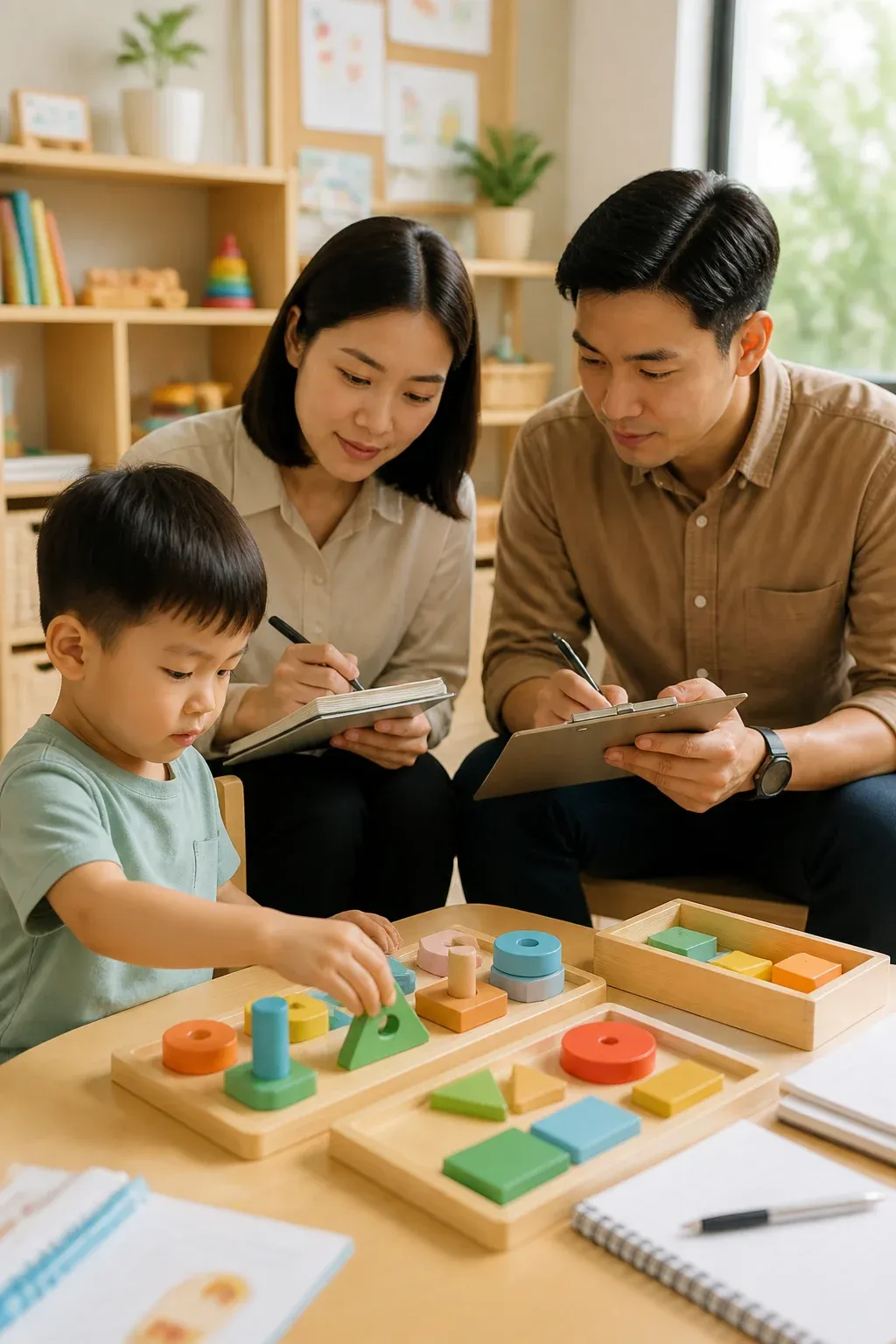
Choosing educational toys can look like a simple decision. A toy has a cheerful design, an age label on the box, perhaps a few claims about creativity or motor skills, and it seems ready to go into the cart.
The real test starts after it gets home.
Will the child actually want to use it more than once? Can they handle it comfortably without constant adult help? Is the challenge level right for where they are now? Will it still invite new kinds of play after the novelty of opening the package has worn off?
Those questions matter because children rarely experience toys as isolated products. A toy becomes part of everyday life: carried from a shelf to the floor, mixed with other objects, used in pretend stories, dropped, rebuilt, abandoned for a week, and rediscovered later. In the process, children are not only “learning” in the formal sense. They are practicing how to observe, make decisions, coordinate movement, solve small problems, communicate ideas, and persist when something does not work on the first try.
That is why the word educational should never be the only reason to choose a toy. The label means very little if the design, material, size, challenge level, and play possibilities do not suit the child who will actually use it.
Before buying, it helps to look beyond the packaging and think about the experience the toy is likely to create. These ten checks are a practical place to start.
1. Look closely at the materials and finishing
The first thing worth checking is not how attractive the toy looks, but how it is made.
Young children explore physically. They grip, turn, push, stack, drag, drop, and sometimes bring objects close to their face. That means details that seem minor to an adult can make a noticeable difference during play.
Run your attention over the surfaces and edges. Do they feel smooth? Are there sharp corners, rough patches, splinters, loose fasteners, or parts that look as though they could break away easily? If the toy is painted or coated, the finish should look even and durable rather than flaky or easily scratched off.
Construction matters just as much as the visible material. A beautifully designed toy can become frustrating if a wheel wobbles after a few uses, a joint starts to loosen, or two pieces that are meant to fit together stop lining up properly.
A well-finished toy also changes the way adults can supervise. When you trust the basic construction, you can spend more time observing the child’s play and less time repeatedly interrupting with warnings about how carefully the toy must be handled.
2. Match the challenge to the child’s current stage, not only their age
Age recommendations are useful, but they are best treated as a starting point rather than a complete answer.
Two children of the same age can enjoy very different kinds of challenges. One may be fascinated by simple puzzles, while another prefers transporting objects, stacking blocks, sorting shapes, or acting out stories with figures. Previous experience matters too. A child who has spent months building may approach construction toys very differently from a child encountering them for the first time.
The goal is to find a challenge that feels possible, but not automatic.
If a toy is far beyond the child’s current ability, they may give up before they understand what is interesting about it. If it offers almost no challenge, they may explore it briefly and move on. The most useful middle ground is often a toy that invites a little effort, allows small mistakes, and gives the child enough feedback to keep trying.
Watch what happens when they get stuck. Do they try another approach? Do they stay curious after a failed attempt? Can a small hint help them continue without an adult taking over completely? Those responses often tell you more about suitability than the number printed on the package.
3. Think about size, weight, and how the toy feels in small hands
Adults tend to notice a toy’s overall dimensions. Children experience the details much more directly.
A block that is slightly too wide, a piece that is difficult to pinch, or a component that is unexpectedly heavy can change the entire activity. A child who understands what they want to do may still struggle simply because the object is awkward to handle.
Consider the actions the toy requires. Does the child need to lift it, rotate it, line up two pieces, carry it across the room, push it along the floor, or insert one part into another? Are the handles, knobs, pieces, and moving parts proportioned in a way that makes those actions realistic for a young child?
Good sizing supports independence. When children can manipulate the toy themselves, they can stay inside the flow of play instead of constantly stopping to ask an adult to open, hold, lift, or reposition something.
That does not mean every toy must be tiny or lightweight. Large construction pieces and ride-on toys can be wonderful. The important question is whether the scale makes sense for the activity and for the child expected to use it.
4. Ask whether there is more than one meaningful way to play
Some toys are designed around one clear outcome. Others keep opening new possibilities as the child becomes more familiar with them.
The second kind often stays interesting for longer.
Blocks can become a tower, a bridge, a garage, a bed for a toy animal, or a boundary around an imaginary garden. Figures can support storytelling, sorting, role play, counting, or small-world scenes. Simple containers can be filled, emptied, stacked, hidden, carried, and incorporated into completely different games from one day to the next.
This is what makes open-ended play so valuable: the object does not do all of the imaginative work for the child.
When considering an educational toy, try asking a simple question: once the child understands its basic function, what else can happen?
If the answer is “not much,” the toy may still be enjoyable, but its useful life could be narrow. If you can imagine several different forms of play emerging from the same object, there is a better chance it will grow with the child’s ideas instead of becoming irrelevant as soon as the first challenge is mastered.
5. Check whether it can survive ordinary, repeated play
Children are not product testers, but they often behave like very committed ones.
A toy may be carried by one piece that was never meant to be a handle. It may be dropped from a low table, pushed harder than expected, stacked under something heavier, or used dozens of times in one afternoon. None of this is unusual. It is simply how play happens.
That is why durability is not only about getting good value for money. A toy that stays structurally sound also keeps its play value. A loose wheel, weak hinge, warped panel, or broken connector can turn a once-useful activity into a source of frustration.
Look at the parts most likely to receive pressure: joints, screws, axles, handles, hinges, latches, pegs, and moving components. If the toy is made of several pieces, check whether they still fit together cleanly after repeated handling.
Durability becomes even more important in classrooms, playrooms, or homes with siblings, where the same toy may be used by several children over time. Investing in durable toys helps families play with more ease across years of growth.
6. Consider how easy it will be to clean and maintain
This is one of the least glamorous parts of choosing toys, but it has a surprisingly large effect on whether a toy remains practical. Read our full guide on how to clean and care for children’s toys for step-by-step wooden toy maintenance.
A toy that is easy to wipe, dry, and return to use tends to fit daily life better than one that requires a complicated cleaning routine.
Pay attention to deep grooves, fabric sections that cannot be removed, narrow cavities, or surfaces that stain easily. If the toy comes with many pieces, think about maintenance in a broader sense too: can those pieces be gathered and stored easily, or is losing one component likely to make the entire activity unusable?
Simple maintenance reduces friction. Parents and teachers are more likely to keep a toy in regular rotation when cleaning it and putting it away do not feel like separate projects of their own.
7. Look for learning that happens through the play itself
An educational toy does not need to look like a lesson. For instance, classic tools like a wooden shape sorter build essential spatial reasoning and fine motor dexterity through simple, repetitive play.
In fact, some of the richest learning happens when the child is focused on the activity rather than on an adult-defined learning objective.
A stacking activity can involve hand-eye coordination, visual judgment, planning, and persistence. Moving objects between containers may support fine motor control and spatial understanding. Puzzles encourage observation and problem solving. Pretend play gives children room to practice language, social roles, sequencing, and imagination. Building activities introduce ideas about balance, structure, cause and effect, and revision.
The useful question is not simply, “Does this toy develop creativity?” or “Does this improve motor skills?” Those claims are so broad that they can be attached to almost anything.
Instead, look at the actual play mechanism. What does the child have to do, notice, decide, repeat, or adjust? That is where the developmental value becomes clearer.
When the learning is built naturally into the activity, adults do not need to turn every play session into instruction. The child can explore first, while parents or teachers step in when support, conversation, or a new challenge would genuinely add something.
8. Picture the toy in the real space where it will be used
Product photos have a way of making every toy look perfectly sized and beautifully organized. If you are outfitting a classroom or learning space, see our guide on choosing toys for schools and learning spaces.
Real homes and classrooms are rarely that empty.
There may be a small play table, a shelf that already holds several baskets, siblings sharing the same floor area, furniture that limits movement, or a walkway that cannot be blocked by a large setup. A toy that looks compact inside its packaging may take up much more room once every piece is spread out.
Think about both play size and storage size.
Will the child need a large clear surface to use it properly? Can the toy be left partly assembled, or must it be dismantled every time? Is there a realistic place to store it? Can the pieces fit into one basket, tray, or box, or will they end up scattered across several areas?
This matters because convenience affects frequency of use. A toy that requires ten minutes of setup and a major clean-up afterward may be chosen less often, even if the activity itself is excellent.
The best fit is not always the smallest toy. It is the one whose physical footprint makes sense for the routines and space of the family or learning environment.
9. Choose visual design that supports play instead of competing with it
Children are naturally drawn to color, movement, sound, pattern, and contrast. But more stimulation is not automatically better.
A toy can be colorful and engaging without asking the child to process every visual cue at once. When the design is overly busy, it can become harder to see what matters: where pieces connect, what can be moved, what belongs together, or which part of the toy invites interaction.
Thoughtful visual design gives the child something clear to work with. Color may help distinguish pieces or categories. Shape can suggest function. A simple surface can make construction or pretend play easier to read and extend.
For adults, visual calm has another practical advantage: toys that are not aggressively busy are often easier to integrate into shared living spaces. They can remain accessible without making the room feel permanently cluttered, which in turn can make it easier to keep play materials within a child’s reach.
The goal is not to make children’s toys look like adult decor. It is to choose design that feels inviting without overwhelming the activity itself.
10. Make sure the child still has room to make their own decisions
One of the most revealing moments in play happens after a child stops following the expected use and begins experimenting.
They may stack the pieces in the “wrong” order, turn a container upside down, use a puzzle piece as part of a pretend meal, or repeat the same action many times because they are trying to understand what changes and what stays the same.
That freedom matters.
Toys that rely heavily on automatic effects, fixed sequences, or a single correct answer can be entertaining, but they sometimes leave the child in a more passive role. The toy performs, and the child triggers it.
A more open design gives the child something to investigate. What happens if the base is wider? Can this piece fit somewhere else? How high can the structure go before it falls? Can these objects become characters instead of construction parts?
Not every attempt needs to succeed. In fact, the small failures are often where some of the most meaningful learning takes place. A tower falls, so the child changes the base. A piece does not fit, so they rotate it. A plan does not work, so they start again with a different idea.
When a toy leaves space for those decisions, its educational value comes less from a printed list of benefits and more from the child’s own process of discovery.
Featured Serious Fun Products
Explore these safe, durable, and educational toys designed for open-ended discovery:
- Wooden Shape Sorter: Develops spatial reasoning, hand-eye coordination, and foundational geometry.
- Montessori Learning Board: Interactive tactile board introducing practical life skills and fine motor control.
- Creative Building Blocks: 50 architectural wooden pieces that inspire boundless creative play.
A better question than “Is this toy educational?”
It is easy to divide toys into two categories: educational and not educational. In practice, that distinction is often too simple to be useful.
A better question is: educational for whom, at what stage, and through what kind of activity?
A toy that is ideal for one child may hold very little interest for another. One child may currently be absorbed in building and connecting. Another may prefer movement, sorting, repetitive actions, pretend scenarios, or transporting objects from place to place. Those interests are not distractions from development. They are often clues about the kinds of experiences the child is ready to explore more deeply.
It is also worth resisting the idea that the toy with the most features must offer the most learning. A simple set of blocks used every week may create far more opportunities for experimentation than a complicated electronic toy that is exciting for two afternoons and then forgotten.
The strongest choice is usually the toy that fits naturally into the child’s current play while leaving enough room for that play to become more complex over time.
Conclusion
Choosing educational toys is not a competition to find the smartest-looking product, the longest feature list, or the most impressive claim on the box.
What matters more is whether the toy is safe, comfortable to use, appropriately challenging, durable enough for repeated play, and open enough to follow the child’s changing ideas.
Before buying, imagine the toy as part of an ordinary day rather than as a product on a shelf. How will the child hold it? What will they do after they understand its most obvious function? Where will it live when play is over? Will it still offer something interesting after a few weeks?
That small shift in perspective makes choosing toys much easier. Instead of asking whether a product looks educational, you begin asking what kind of experience it creates when it is actually in a child’s hands.
